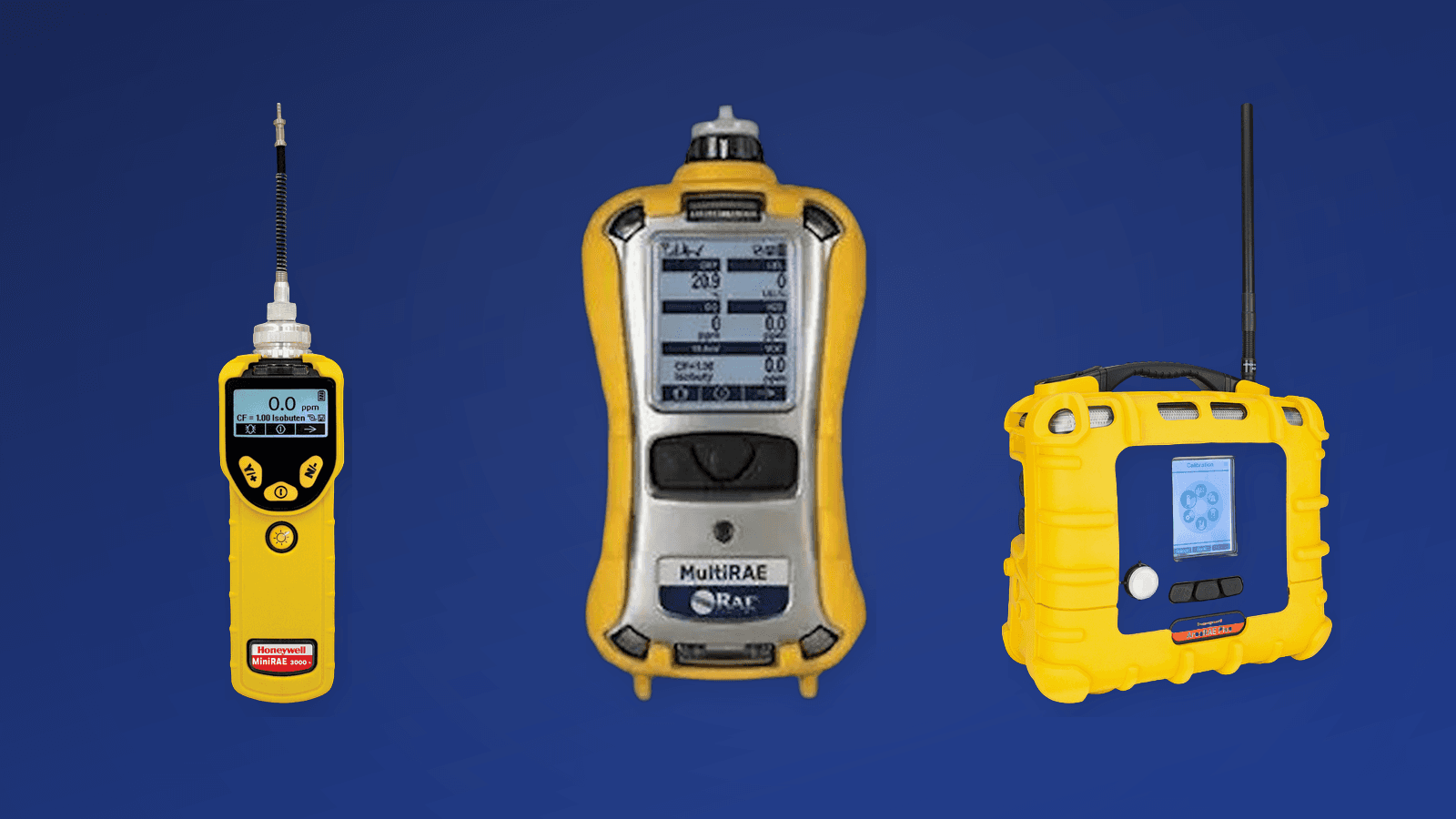
A PID detector — a photoionisation detector — is the instrument safety teams reach for when the hazard is a volatile organic compound (VOC) rather than a single named toxic gas. Fuels, solvents, adhesives, paints and many process chemicals can be present as vapours during tank cleaning, painting, shutdowns and soil or groundwater work. A four-gas monitor that only looks at oxygen, combustibles, hydrogen sulfide and carbon monoxide will not give you a useful reading for those vapours.
This article explains how a PID works, when you need one, and which Honeywell instruments cover portable, personal, transportable and fixed VOC monitoring: the MiniRAE 3000+, MultiRAE, ToxiRAE Pro, AreaRAE Plus, AreaRAE Pro and the RAEGuard 2 PID.
How a PID detector works
A photoionisation detector uses an ultraviolet lamp to ionise VOC molecules in a sample of air. The resulting current is a measure of concentration, usually displayed in parts per million (ppm) or, on some instruments, parts per billion (ppb). The lamp energy matters: a higher-energy lamp can ionise a wider set of compounds. PIDs are broadband devices. They tell you that ionisable vapour is present; they do not, by themselves, identify which compound it is. That is why correction factors and compound libraries are part of serious PID instruments.
A PID is therefore a screening and monitoring tool. You still need to know what chemicals are credible on the job, and you still need a flammable-gas (LEL) sensor where an explosive atmosphere is possible, because a PID and an LEL sensor answer different questions.
When do you need a PID for VOCs?
- Confined space work in tanks, vessels or sewers that have held fuels, solvents or hydrocarbons.
- Shutdowns and turnarounds where residual product, cleaning solvents or hot work can release vapour.
- Paint, adhesive, composite or chemical-handling tasks in manufacturing.
- Spill, remediation and environmental work where VOC plumes need to be located and tracked.
- Fixed monitoring of a process area, solvent store or loading rack that can release VOCs on a regular basis.
If the only credible hazards are oxygen deficiency, methane or a named toxic such as hydrogen sulfide, a PID may not be required. If workers can be exposed to mixed or unknown organic vapours, a PID should be on the equipment list.
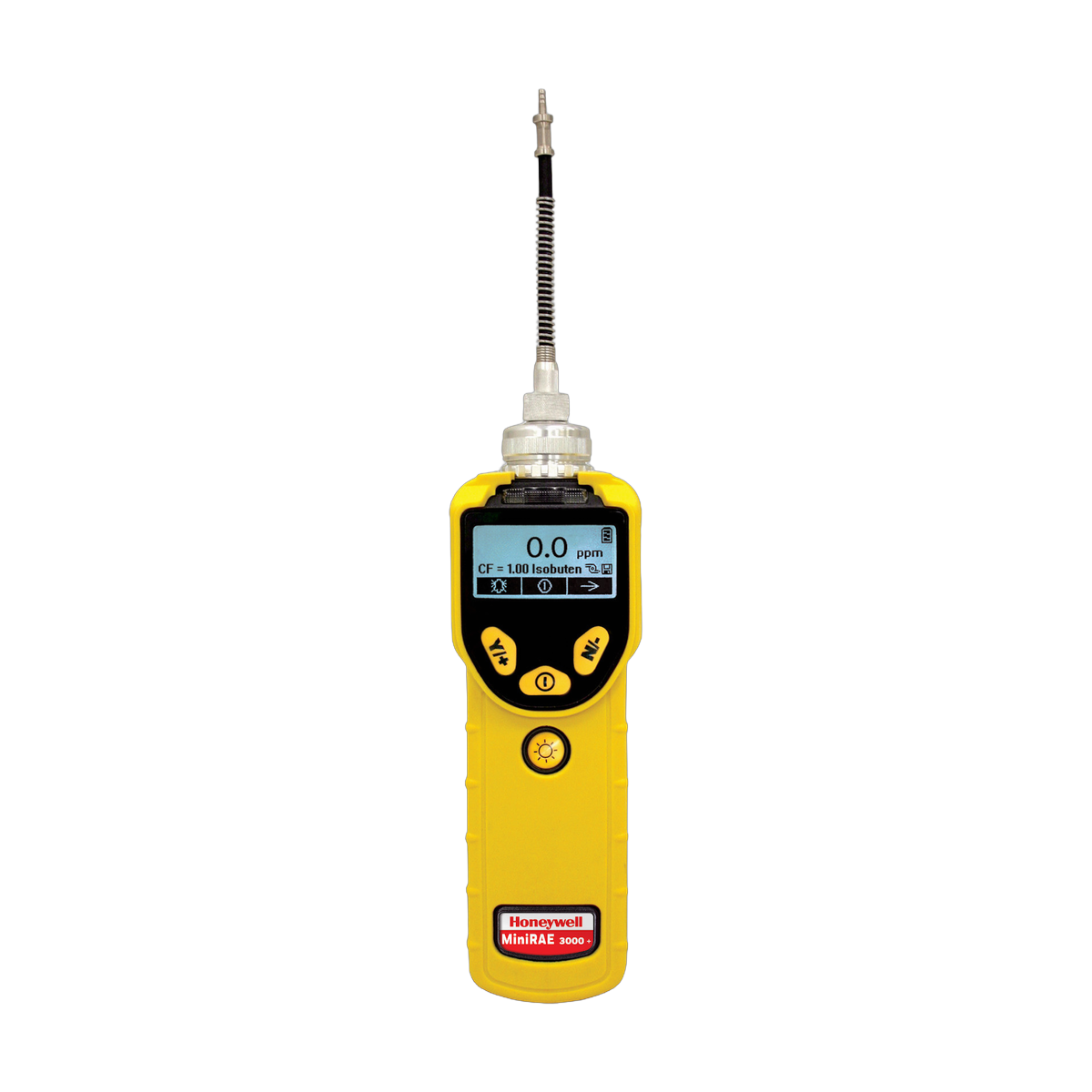
Handheld VOC monitoring: MiniRAE 3000+
The Honeywell MiniRAE 3000+ (PGM-7320) is a handheld PID VOC monitor with a detection range of 0 to 15,000 ppm and a typical three-second response. A 10.6 eV lamp is standard, with optional 11.7 eV and 9.8 eV lamps. Honeywell publishes correction factors for more than 200 compounds, together with humidity compensation, patented PID lamp auto-cleaning and Reflex PID Technology. The sample pump can draw from up to 100 ft of tubing, which is useful for pre-entry checks and leak hunting. The instrument is IP65/67, includes a built-in flashlight, and can store up to six months of one-minute datalogging. Size is 25.5 × 7.6 × 6.4 cm and weight is 738 g.
Choose the MiniRAE 3000+ when VOC measurement is the main job: leak survey, enclosure screening, or a dedicated VOC reading alongside a separate four-gas monitor.
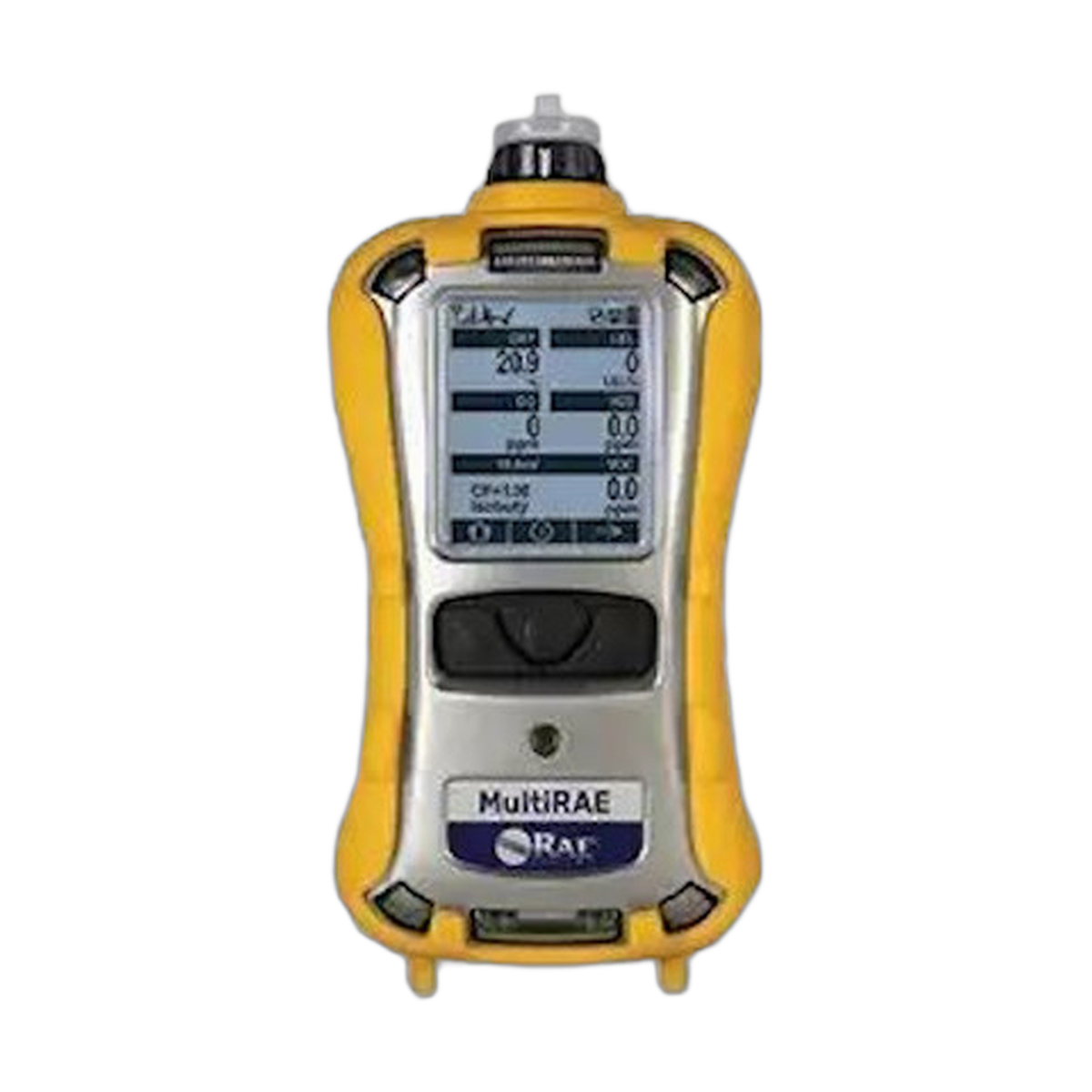
Multi-gas with a PID: MultiRAE
The Honeywell MultiRAE (PGM-6228) puts a PID in a portable multi-gas detector that accepts up to six sensors from 25 field-interchangeable options, including PID, NDIR and exotic sensors. The PID VOC range is 0 to 5,000 ppm with 0.1 ppm resolution. Onboard libraries cover 190 VOCs and 55 combustible gases. A built-in pump (about 250 cc/min), IP65 housing, five local and remote alarms including man-down, and optional integrated wireless make it a strong choice when a worker must carry oxygen, LEL, toxics and VOC measurement in one instrument. Runtime is about 12 hours, or about 18 hours with an extended pack.
For confined space teams that cannot juggle two handhelds, MultiRAE is usually the more practical PID-equipped option.
Personal, area and fixed PID options
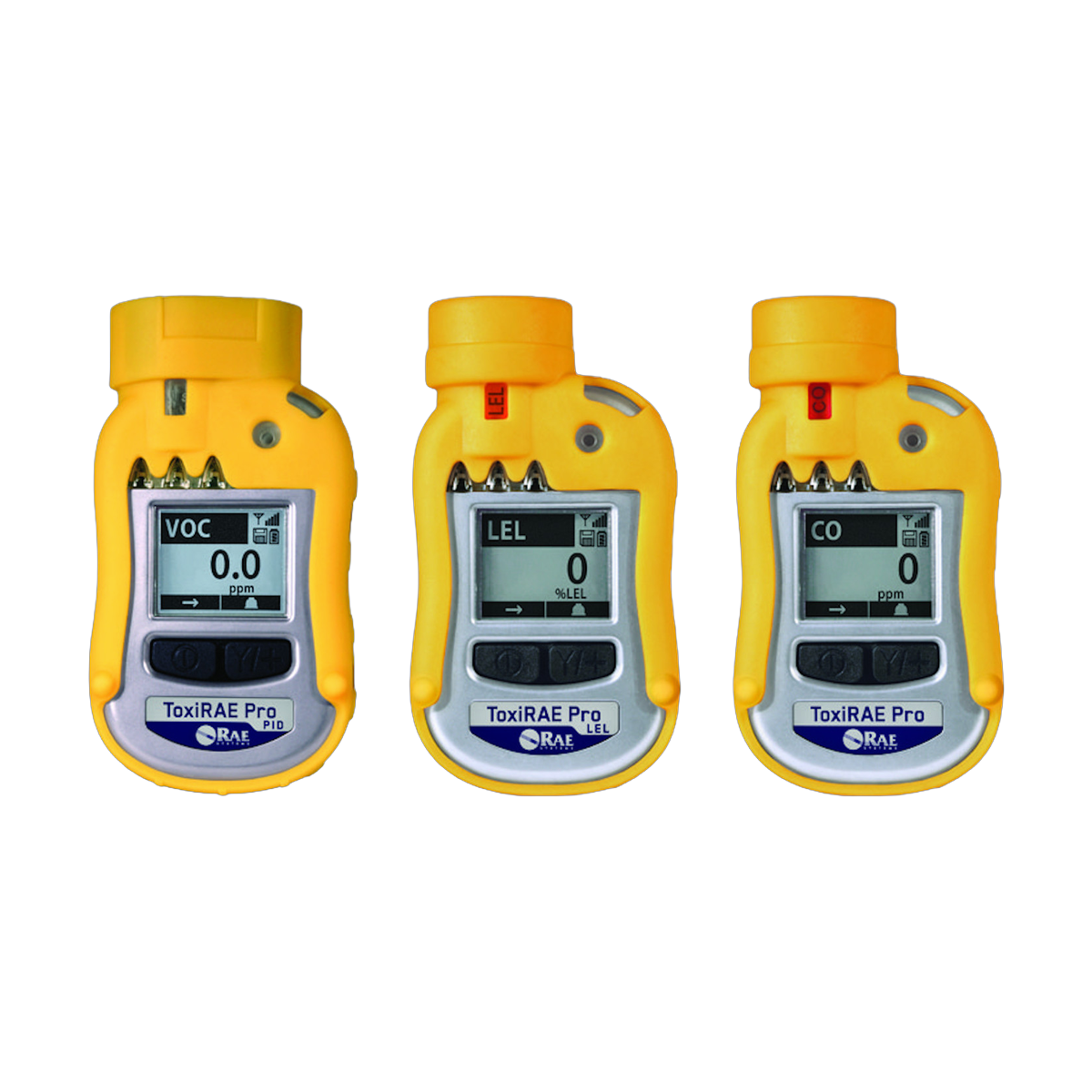
The Honeywell ToxiRAE Pro family includes PID variants for personal VOC monitoring. The PGM-1860 non-wireless personal monitor can be configured for VOCs as well as toxic gases, carbon dioxide or oxygen, depending on the sensor. PID variants are rated IP-54; electrochemical, LEL and carbon dioxide versions are IP-65. This is a single-sensor personal alarm, not a six-gas entry instrument.
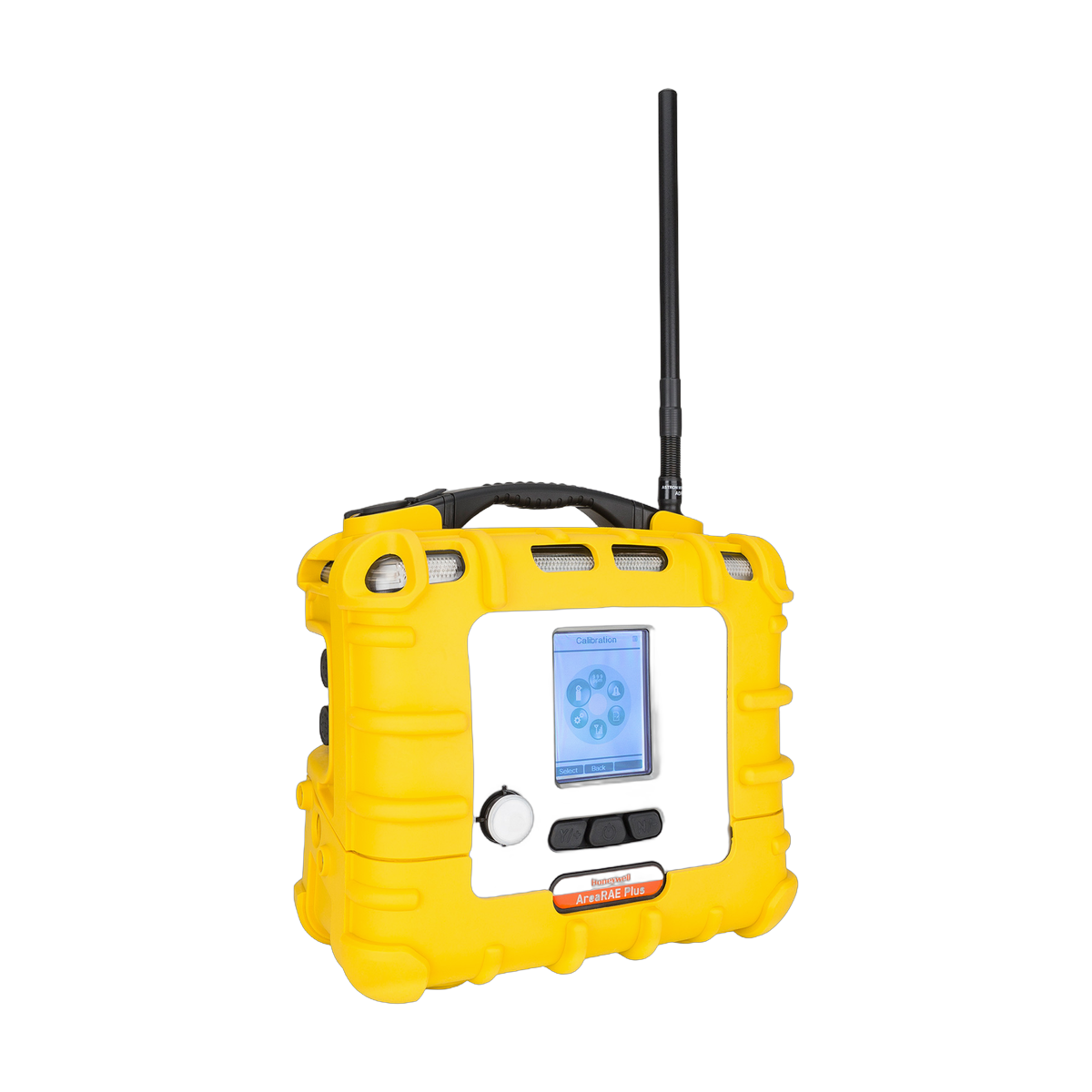
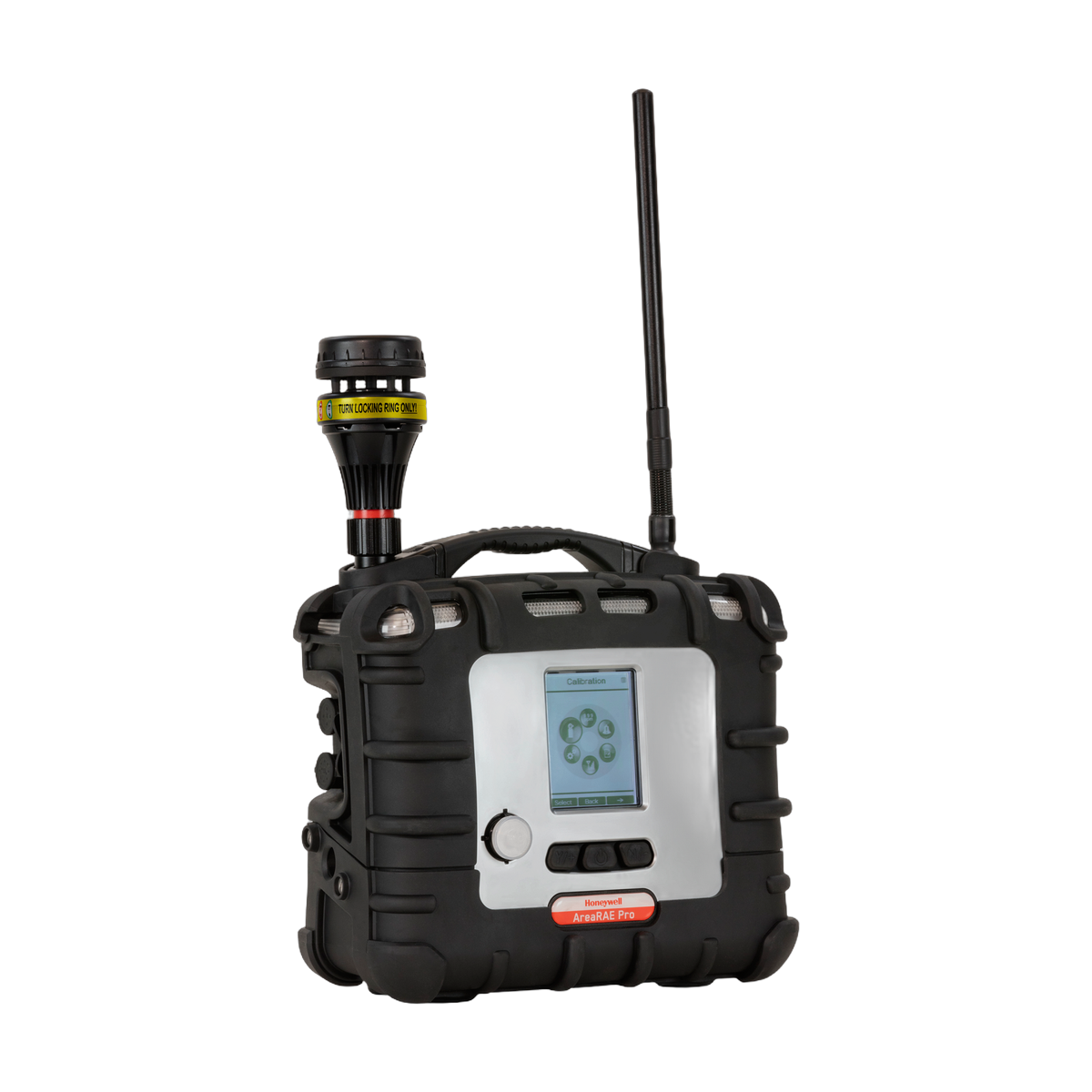
For the fence line of a shutdown or a temporary work area, the AreaRAE Plus can watch up to seven threats, including VOCs via a 7R+ PID that measures in ppm, plus combustibles, toxics and oxygen. The AreaRAE Pro adds ppb-level VOC measurement and a dedicated gamma sensor slot, which matters for emergency response and some industrial scenarios where radiation is also a concern. Both are wireless, transportable area monitors; the Plus can send data up to 2 miles (3 km) on ISM 900 MHz, and the Pro can send wireless data to a command station up to two miles (3 km) away.
Where VOC risk is continuous rather than temporary, a fixed detector is the usual next step. The Honeywell RAEGuard 2 PID is a fixed photoionisation detector for a broad range of VOCs. Official Honeywell specifications list detection ranges of 0.01 to 100 ppm, 0.1 to 1000 ppm, or 1 to 1000 ppm. It operates on 10 to 28 VDC and provides a 4–20 mA three-wire analogue output and RS-485 Modbus digital output. The digital PID module can be removed in hazardous locations for calibration or maintenance. A graphic display, local sound alarm and LED status indication are provided, and low, high and fault relays can trigger external alarms or process controls. A magnetic key interface allows calibration and parameter changes with the explosion-proof enclosure in place.
Limits you should plan for
- A PID reading is not a compound identification. Use correction factors and your knowledge of the process chemicals.
- Lamp energy determines which compounds can be ionised. MiniRAE 3000+ offers 10.6 eV as standard, with 11.7 eV and 9.8 eV as options.
- Humidity and dirt affect PID lamps. Features such as humidity compensation and lamp auto-cleaning on the MiniRAE 3000+ are there for a reason; follow the maintenance schedule.
- A PID does not replace an LEL sensor for flammable-atmosphere protection, and it does not replace a substance-specific sensor where a named toxic is the legally or operationally relevant hazard.
If you are specifying PID instruments for VOC work in mining, oil and gas, manufacturing or utilities, request a quote from Territory Instruments. Share the compounds, the range you need (ppm or ppb), and whether the job is handheld, personal, area or fixed monitoring.
Frequently asked questions
What does PID stand for in a gas detector?
PID stands for photoionisation detector. An ultraviolet lamp ionises volatile organic compounds in the sample, and the instrument reports a concentration. It is a broadband VOC measurement, not a gas-specific identification.
Is a PID the same as an LEL sensor?
No. An LEL sensor is intended to warn of a flammable atmosphere as a percentage of the lower explosive limit. A PID is designed to measure VOC concentration, often at much lower levels than those that would register on an LEL channel. Many multi-gas instruments, including MultiRAE, can carry both.
Do I need a handheld PID or a fixed RAEGuard 2?
Use a handheld MiniRAE 3000+ or a MultiRAE for surveys, confined space work and temporary tasks. Use a fixed RAEGuard 2 PID where VOC monitoring needs to run continuously and report into a control or alarm system over 4–20 mA or Modbus.
When is ppb-level VOC measurement worth specifying?
When you need finer resolution than a standard ppm PID, such as environmental or emergency-response work. AreaRAE Pro offers ppb-level VOC measurement; AreaRAE Plus and MiniRAE 3000+ are specified in ppm ranges.